Publications

AN IDENTITY FOR NEW ZEALAND?

A copy of this publication is available without charge by calling phone 021 235 6281

What makes New Zealanders unique – how do they see themselves and how do others see them?

This book by John Collinge traces early British settlement of New Zealand through the eyes of ordinary settlers at the outset and in the context of the forces and circumstances in Britain which caused their emigration. It deals with their backgrounds in Britain, Scotland, Ireland and Wales, their contributions upon arrival and whether their legacies and characteristics have endured – with an eye to the search for a separate New Zealand identity today.

It is a factual and perceptive account of the reasons in Britain for emigration and why the settlers chose New Zealand. It is written from the perspectives of both gentry and working class – the descendants of whom subsequently married in New Zealand. It covers those who brought in farms, built business based upon rural produce, provided infrastructure and rural services, marketed its products, protected its settlers, recreated Britain and connected with Maori – the real backbone of New Zealand. The perspective is fresh and the material new.

New Zealand's separate identity is elusive – especially given its similarities with both Britain and Australia. It is however important in that it impacts upon many fundamental issues such as national aspirations, who is to be Head of State, the make-up of the flag, and so on.

MAGGIE - SOME MEMORIES

This collection is a tribute to Maggie Collinge – comprising painting, poems, short stories, sketches, photographs, writings and memorabilia assembled form her papers and belongings upon her unexpected death in February 2017. Sample are reproduced in the hope that they will be of interest to friends and family who have never seen them and that they will bring enjoyment to others.

Maggie PDF-A copy of the book can be downloaded here

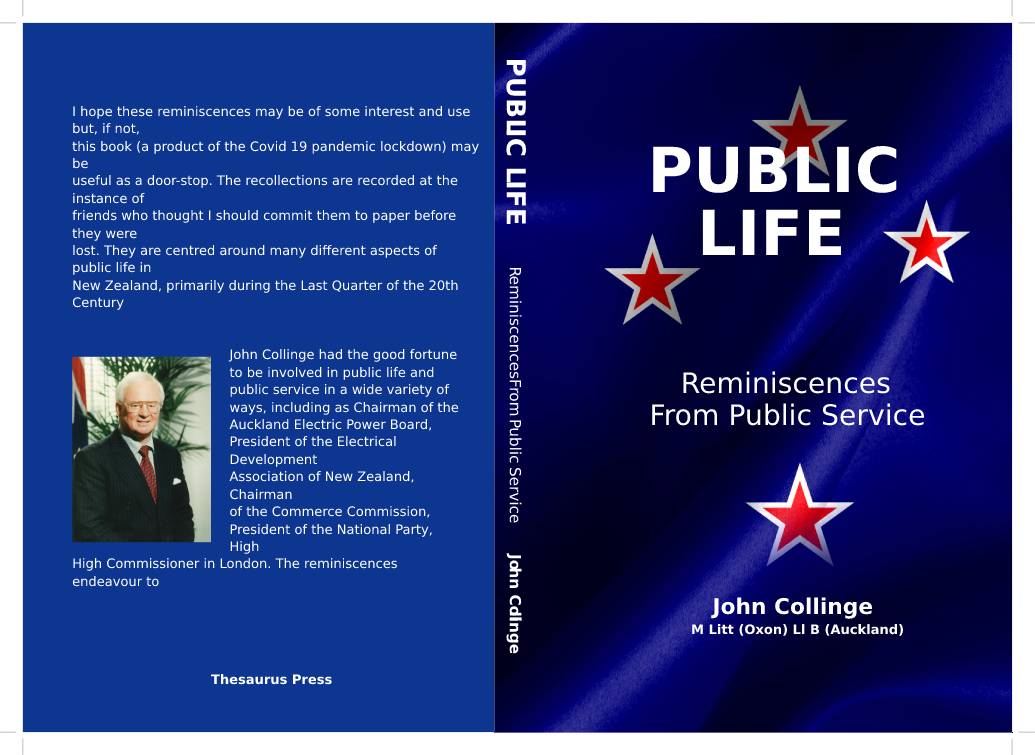
Public Life - Reminiscences from Public Service

These recollections are centred around different aspects of public life in New Zealand, primarily during the Last Quarter of the 20 th Century (1975-2000). They involve a wide variety of roles, representative of law, business, local politics, administration, national politics and diplomacy. They provide a look into the era from the perspective of a participant and observer, some personal insights and some colour and balance, while looking forward to the context of present times, endeavouring to provide a sympathetic overview of public life.

Public Life pdf

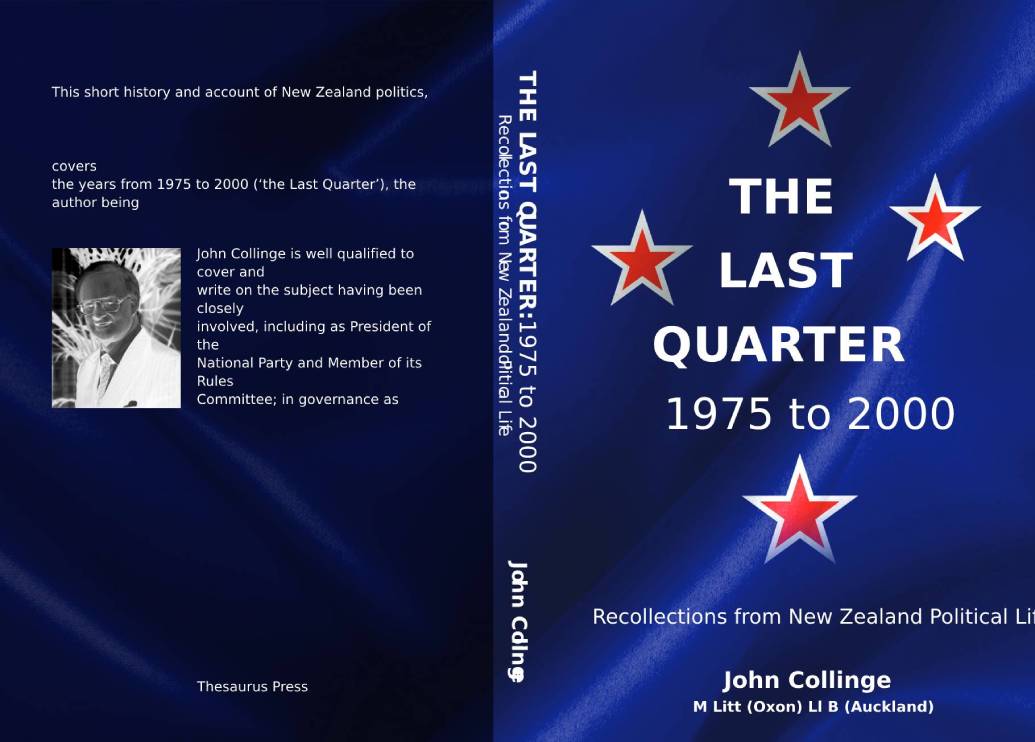
The Last Quarter 1975 to 2000

This is a recollection of New Zealand Political Life for the period of 1975-2000, i.e. the Last Quarter. It lasted through the Muldoon period, the Lange/Douglas period and the Bolger period. The author was closely associated with the Quarter - in the Muldoon period as Chairman of the Mt Albert Electorate and as a Member of the Rules Committee of the National Party; in the Lange/Douglas period as Chairman of the Commerce Commission; and in the Bolger period as President of the National Party and High Commissioner in London. He was thus closely associated with the period across a variety of interests. It also involved a variety of approaches - particularly from the interventionist Muldoon era to the non interventionist era epitomised by Roger Douglas. It arguably led to the current era which was less motivated by dogma and more by practical considerations. During this period it was noticeable that the new immigrants and the focus away from no rural skills made New Zealand a more interesting and diverse place in which to live, work and contribute. Copies available upon request.

The Last Quarter 1975 to 2000 pdf

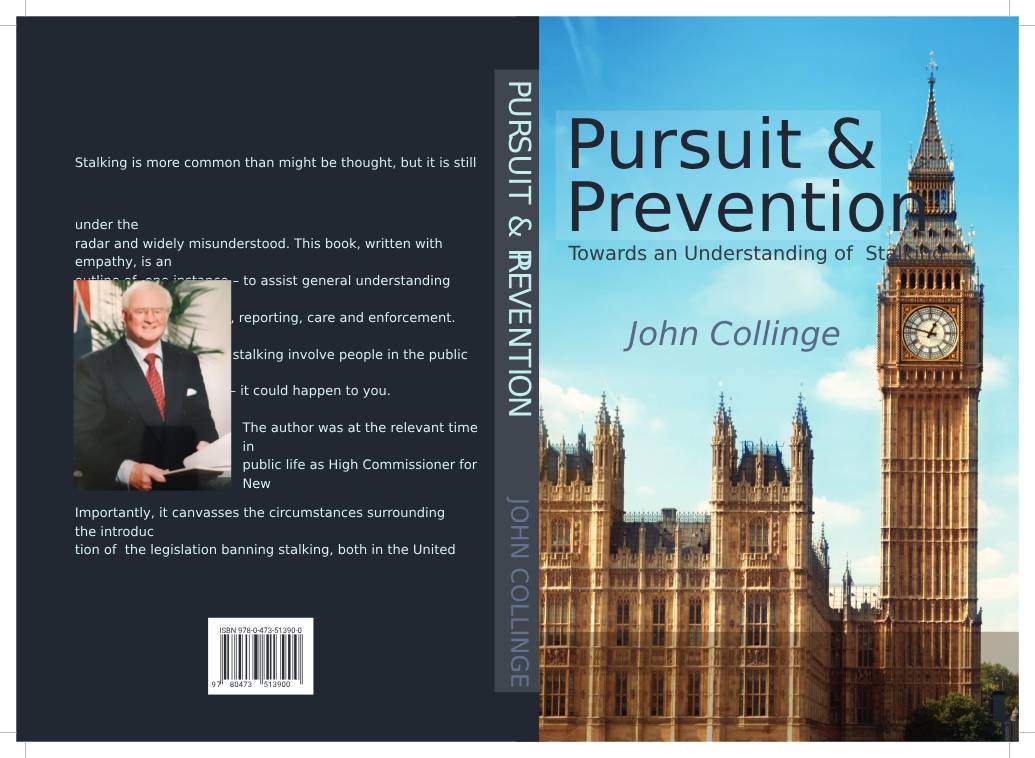
Pursuit and Prevention

This is set in the background of both England and New Zealand and outlines the background of the change of law which, in 1997, made stalking illegal in both England and New Zealand. Previously, there had been no such law and though various offences in conjunction might be prosecuted, they were often trivial compared with concerted acts of unwanted harassment to the detriment of those stalked. The events outlined contributed significantly to the enactment of anti-stalking law both in England and New Zealand and as a result meant stalking became less acceptable. The events in question occurred before stalking was illegal and is a tribute to all those involved. Stalking creates serious consequences for the targets - nuisance, apprehension, distress and loss of security - it is a Godsend that it is now illegal. Copies available on request.

Pursuit and Prevention pdf